5 Alarming Reasons Ear Specialists Are Quietly Protecting Their Own Parents From Going Deaf — And the Compound They're Using That Nobody Is Talking About
Age-related hearing loss is not caused by "old ears." It is caused by a fire — an inflammatory switch stuck ON that quietly burns out the cells that hear words, and cries, and warnings. The hearing aid industry sells a $5,000 device that turns the volume up and does nothing to the fire. Here is what ear specialists are doing for their own parents right now — and why they haven't told you yet.
Medically reviewed by Dr. Richard Thornton, MD — Internal Medicine, 31 years clinical practice
Published Yesterday | 11 min read
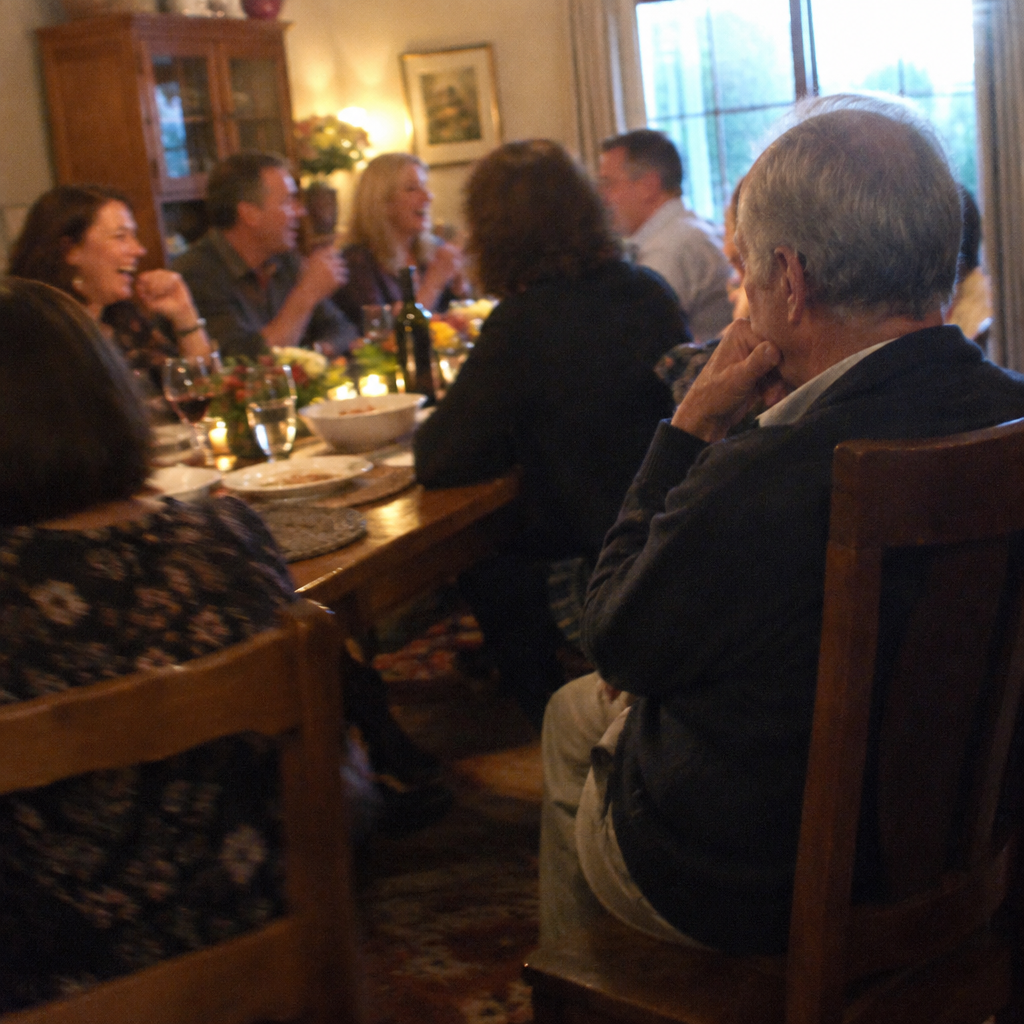
#1: The Hearing Aids Everyone Told You Were the Answer Fix the Wrong Problem Entirely.
A woman in Ohio screamed at her seven-year-old grandson to stop mumbling until he cried. A man in Texas came within days of divorcing the wife he'd loved for forty years. A grandmother in Arizona stood ten feet from her choking grandchild and heard nothing at all.
Every one of them was going deaf. Not one of them knew it.
And here is what all three had been told, or would soon be told, by the hearing clinic: get a hearing aid. Five thousand dollars. Problem solved.
It was not solved.
Because a hearing aid does one thing: it makes sound louder. And for a great many people, louder was never the problem. They can hear that someone is talking. What they've lost is the ability to pull the words out of the noise — because the tiny inner-ear cells that catch the high, sharp consonants, the ones that turn a mumble into a sentence, are dying.
You cannot fix a dying cell by turning up the volume. A hearing aid makes the mumbling louder. It does not make it clearer. And it does nothing to stop the next cells from dying.
That is why so many of those five-thousand-dollar devices end up in a drawer within a year — a louder version of a problem that was never about loud.
But here is the finding that changed the direction of this entire investigation.
The failure of the device is not why people keep going deaf.
People keep going deaf because a fire is burning in the inner ear — a chronic, low-grade inflammation that quietly kills the hair cells, year after year, the highest and softest ones first. The device sits in the ear amplifying the world. The fire keeps burning. And no hearing aid on earth touches it.
"A hearing aid manages the loss you already have. It does nothing to the inflammation still taking more. I fit patients with two-thousand-dollar devices in each ear and send them home, and the thing actually killing their hearing keeps right on going, untouched, because there is no device to sell for that. The aid is a bigger microphone. The fire is what I was never trained to fight."— Audiologist, 22 years in practice
Age-related hearing loss affects roughly 1 in 3 adults between 65 and 74, and close to half of those over 75 — the third most common chronic condition in older adults. And the average person waits about ten years after it begins before doing anything about it. Ten years of cells lost for good.
⚠️ What this means for you: If someone you love has "gotten distant," "stopped listening," or keeps insisting everyone mumbles, a hearing aid is not the whole answer — and it may not be the answer at all. The device turns up the volume. It does not calm the fire that is quietly burning out the cells. And that fire has usually been burning for years before anyone notices a thing.
#2: You're Going Deaf Before You Know It. By the Time You Notice, Years Are Already Gone.
Here is the cruelest part, and the reason it hides so well.
You do not lose your hearing evenly, and you do not go silent. You lose the high frequencies first — the soft, sharp consonants, the parts that separate "fifty" from "sixty," a word from a blur. So you still hear that people are talking. You simply can't make out what they're saying anymore.
And your brain, trying to help, fills in the gaps from context. So from the inside, nothing feels wrong. It doesn't feel like you're going deaf. It feels like everyone started mumbling. Like the grandkids are so quiet now. Like people just don't speak up the way they used to.
So you don't go to a doctor. Why would you? Your hearing feels fine. It's everyone else who needs to speak up.
And the entire time, every person who loves you can hear it perfectly. They turn the TV down after you leave the room. They watch you answer a question nobody asked. They repeat themselves, then stop repeating themselves, then just wave a hand and say "never mind." You are the last person in your own family to find out you're going deaf.
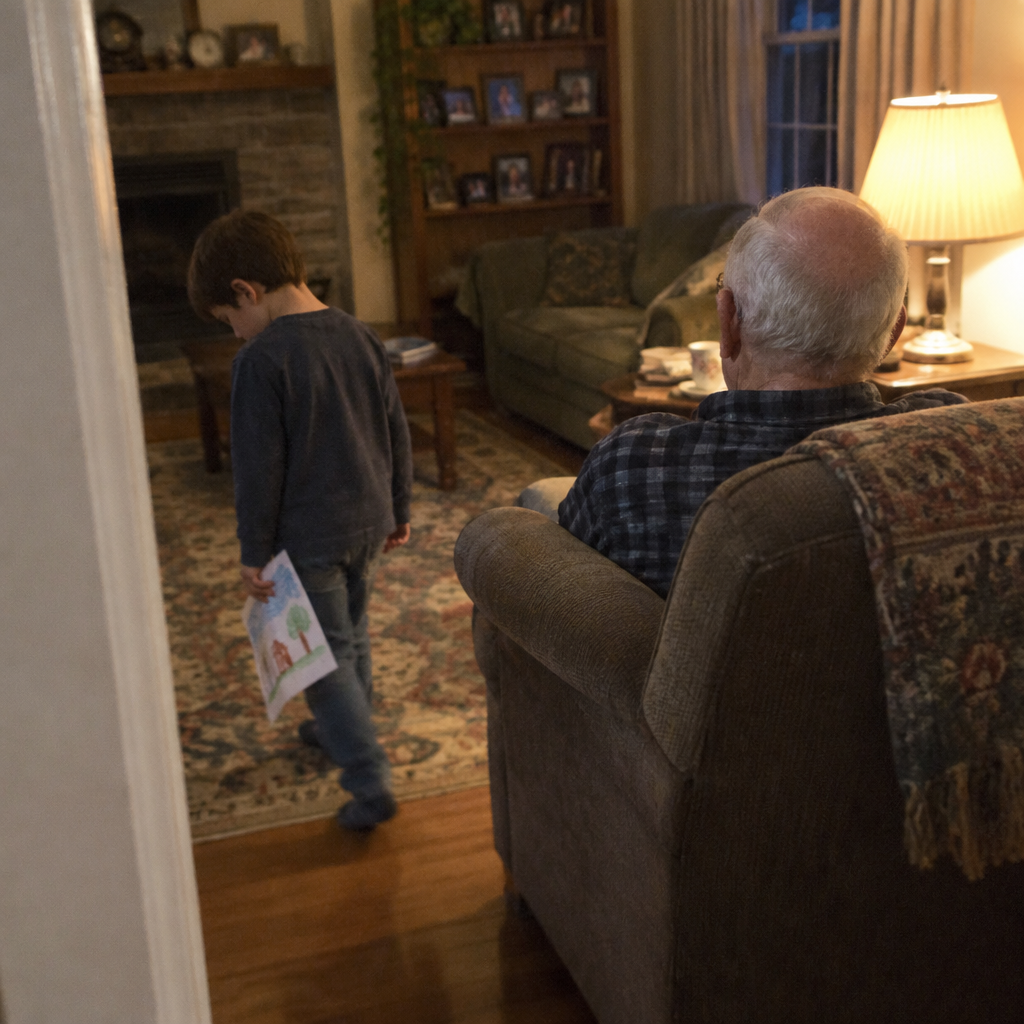
A grandchild learns Grandpa can't hear him anymore, and quietly stops bringing him things. (National Health Alert)
"A grandfather sat at his own birthday dinner while his whole family sang to him, and he heard a warm blur and not one word. He smiled and clapped along to a song he couldn't hear. His daughter told me afterward that she'd spent two years thinking he'd gone cold on the family. He hadn't. He was drowning in silence at his own table, and too proud to say so."— Ear, Nose & Throat Surgeon, Houston, TX
And once those cells are gone, they are gone. They are more like teeth than skin — you are born with all you will ever have, and every one this fire kills is gone for good, with no device and no surgery that brings it back. Which means every month it goes unaddressed, a little more of the world becomes permanently unreachable.
#3: The Hearing Clinic Is Built to Sell You a Device — Not to Stop the Loss.
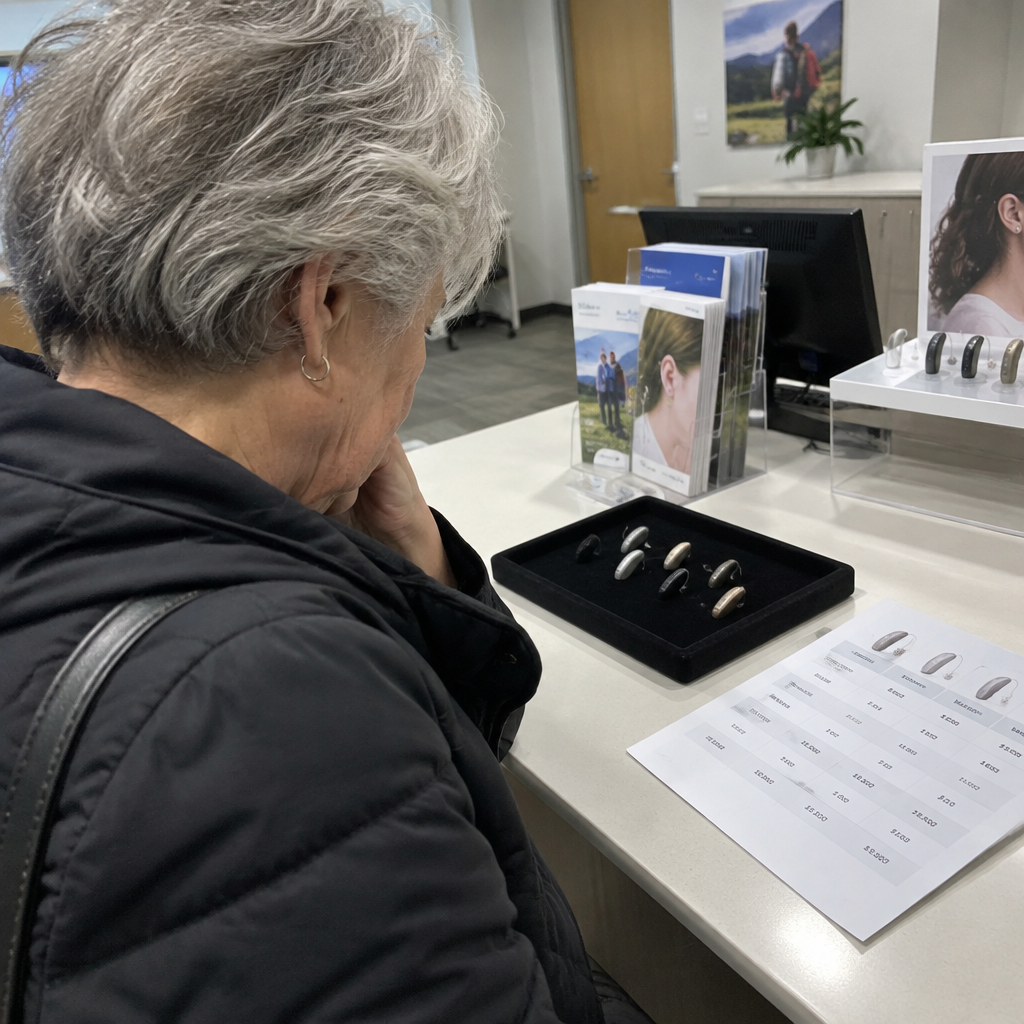
A typical hearing aid dispensing counter. The entire visit is built around fitting a device — not around the inflammation quietly killing the cells. (National Health Alert)
This is the part no one in the industry wants to say out loud.
Walk into most hearing clinics and the whole encounter is aimed at one thing: selling and fitting a device. They test which frequencies you've already lost. They pick a model. They program it. They schedule the follow-up. And nowhere in that visit does anyone ask why those cells are dying, or whether the fire behind it can be fought.
A retired bookkeeper in Dallas went in because her family insisted. She left with five-thousand-dollar aids, wore them a month, and still couldn't understand her grandchildren at Sunday dinner. She went back. They sold her a stronger pair.
Her daughter called the clinic months later: "My mother spent her savings to hear her grandkids, and she still can't, and no one ever told her there was anything else."
"The money in my field is not in a patient who gets better. It's in a patient who never does — who keeps coming back, keeps upgrading, keeps paying for a stronger device every few years as the loss deepens. A patient whose inflammation is actually calmed, who stops losing cells, is worth almost nothing to the machine. I say that as someone who spent nineteen years inside it."— Retired hearing clinic director
Specialists we spoke with were blunt: the standard of care manages the symptom expertly and touches the cause almost never. You are handed a way to cope, sent home, and the thing driving the loss keeps right on going.
⚠️ The device is not the villain. Worn, for the right person, a hearing aid genuinely helps. The point is narrower and more damning: nothing in that visit is aimed at the fire still killing the cells — the reason the loss keeps deepening no matter how many devices you buy.
#4: Being Healthy Isn't Protecting People's Hearing. And Everything at the Store Is Useless Against What's Actually Taking It.
The assumption has always been: if you never worked a loud job and you take care of yourself, your hearing will hold.
It doesn't work that way.
A 66-year-old retired schoolteacher — sharp, active, three miles every morning — spent two years quietly furious at her family for mumbling before she screamed at her own grandson and made him cry. Her bloodwork was "great." Cholesterol normal. Blood pressure normal. A1C normal.
Nobody checked her CRP. It was 4.6. The fire was burning, and it was burning in her ears.
A man the same age across town, same clean bill of health but a CRP of 1.1, was hearing his grandchildren just fine at 74. Same age, same "normal" bloodwork. One going deaf a decade early, one not, and the only difference anyone ever measured was the number nobody thought to check.
"I see patients who did everything right. Never worked a loud job. Ate clean. Stayed active. And they're still losing the top of their hearing in their fifties and sixties — because fitness doesn't calm the inflammation. The fire in their blood is what's cooking the cells, and nobody is putting it out. They walk into a drugstore looking for an answer, and there isn't one on the shelf."— Otolaryngologist, Denver, CO
So people do what they've always done. They buy the ear drops, try the "ear health" gummies, turn the TV up, and trust the system.

An entire aisle of ear-care products. Not a single one touches the inflammation that determines whose hearing survives and whose doesn't. (National Health Alert)
❌ Hearing aids: Amplify sound. Louder, not clearer, once the cells that carry the words are dying. Nothing to the switch. Five thousand dollars, and a drawer full of them across the country.
❌ "Ear health" supplements & gummies: Vague antioxidant blends at pennies of active dose. May do a little, aimed at nothing in particular. Nowhere near the inflammatory switch driving the loss.
❌ Ear drops / wax removal: For wax and irritation, and useful for that. Zero effect on the hair cells or the inflammation killing them.
❌ Ginkgo biloba: Marketed for circulation and "ringing." The evidence for hearing is thin to none, and it thins the blood — a real problem for anyone over 55 on medication. Does not touch the switch.
❌ Sound amplifiers / "hearables": Cheaper microphones, same core flaw as the expensive ones. Louder is not clearer, and neither slows the cells dying.
❌ Vitamin megadoses: May support general health over time. Will not calm a chronic inflammatory fire already cooking the inner ear. A water pistol at a forest fire.
Every product on that shelf — and nearly every protocol in the standard of care — operates after the cells are already dying. They amplify. They clean. They manage. They cope.
Not a single one calms the inflammation that is actually taking the hearing.
Americans spend billions every year on hearing devices and ear-care products. Almost none of it addresses the inflammatory switch that determines how fast the cells die.
The entire system turns up the volume while the patient's own inflammation does the killing.
#5: The Noise Doesn't Take Your Hearing. Your Own Inflammation Does. Ear Specialists Have Figured Out How to Calm It. They Just Haven't Told You.
Deep in the inner ear sit thousands of tiny hair cells that turn sound into something the brain can understand. The high, soft sounds — the consonants, a child's cry, a smoke alarm — live on the most delicate of them, at the very entrance of the cochlea where every sound wave strikes first and wears them down soonest.
And here is what the research says, and what almost no patient is ever told.
There is a switch inside your cells — the researchers call it NF-kB, the master inflammatory switch. In a healthy body it activates during a threat and turns OFF when the threat passes. In millions of Americans over 55, it gets stuck ON. Running for years. Producing inflammatory chemicals around the clock. And in the inner ear, that constant low fire quietly kills the hair cells, the high-note ones first.
It is the same switch behind the stiff joints, the rising blood pressure, the slow aging of everything. One fire, many rooms. And one of the rooms it burns down is the ear.
But here is what the specialists surrounded by this every day have figured out.
Calm the switch, and you slow the fire — and protect the cells that are still alive.
We interviewed 14 audiologists and ear surgeons across six states. Every one described the same compound.
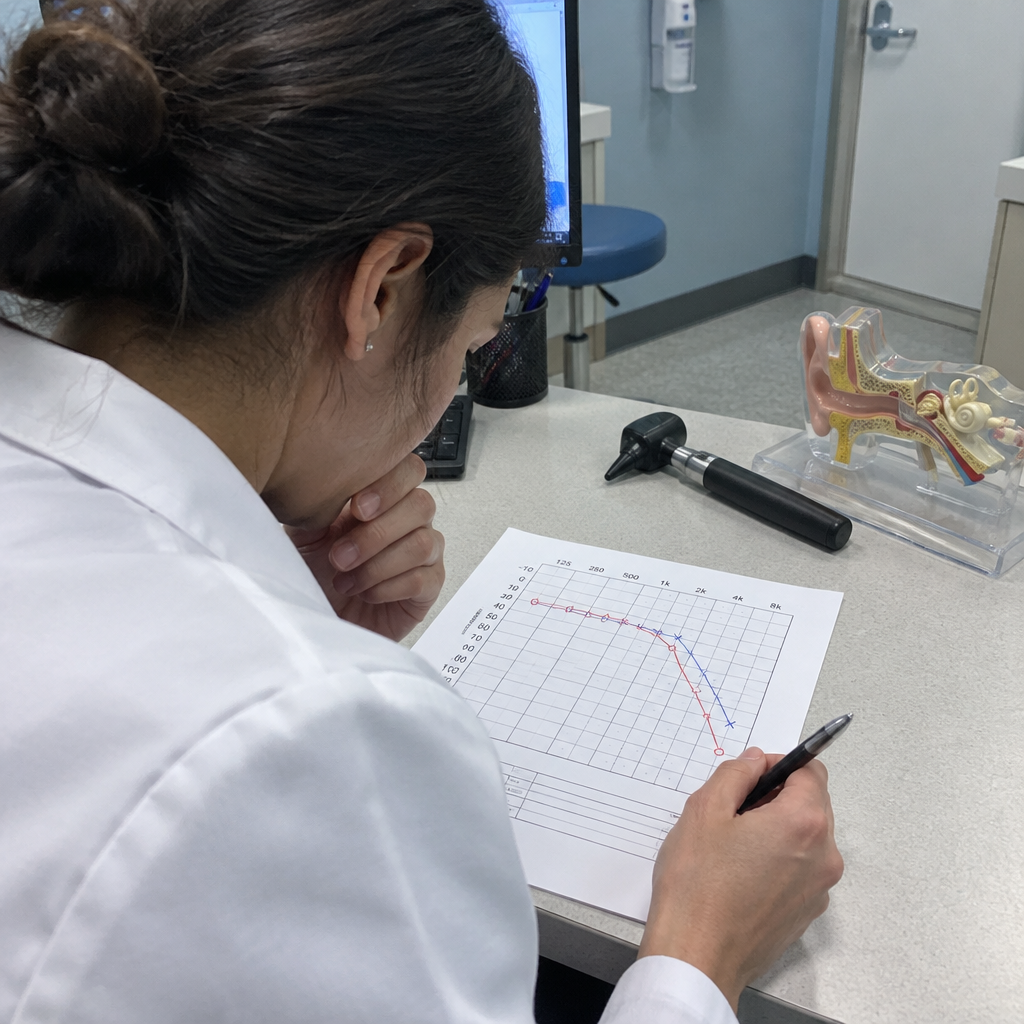
An ear specialist reviewing a patient's hearing test. Specialists like this one are using a compound the public doesn't know about — on their own parents. (National Health Alert)
Thymoquinone. The primary bioactive compound in Nigella sativa — Ethiopian black seed. First isolated in 1963. Published in over 1,000 peer-reviewed studies across six decades. 3,000 years of documented human use. Seeds found in the tomb of King Tutankhamun.
Thymoquinone dials the NF-kB switch down at the cellular level, at the source, instead of managing the damage after — not by shutting the immune system off, but by calming the chronic inflammation that keeps the fire burning in the cochlea.
The hair cells already gone are gone. But the ones still alive, still carrying the voices you love, are under attack from something that can be fought — and that distinction, between what is lost and what is still defensible, is the whole difference between shrugging and doing something.
The retired teacher's CRP — a $15 blood test that measures the fire — was 4.6. The man across town who could still hear his grandchildren at 74 had a CRP of 1.1. Same age. Same "normal" bloodwork. One going deaf a decade early. The only difference was the number nobody checked.
At a calm CRP, the inflammation is a slow drip and the cells hold for years. At a high CRP, it is a steady burn, and the highest, sweetest sounds — the grandchildren's voices — go first and fastest.
The compound drains the fire. So the cells that are left get to stay.
What Ear Specialists Are Using to Protect Their Own Parents
The formulation most cited by the 14 specialists we interviewed is manufactured by Revalia®. Single-origin Ethiopian highland black seed oil, cold-pressed, third-party verified for thymoquinone every lot. The compound that calms the switch.
SEE WHAT SPECIALISTS ARE USING →Why You've Never Heard of This
You cannot patent a seed. No patent means no pharmaceutical investment. No investment means no rep in your doctor's office and no line on the after-visit summary. So it sits in PubMed — published, peer-reviewed, free to read — while the revenue sits in the device.
A pair of hearing aids generates five thousand dollars, plus the batteries, the follow-ups, and the stronger pair in three years. One softgel of the compound that may slow the very loss those devices are chasing generates less than $1.33.
That is why a compound that has been in medical databases for 60 years reaches almost no one, while a generation of parents lost the sound of their grandchildren, blamed themselves, and were sold louder and louder bandages the whole way down. The weapon existed. The financial incentive to tell you about it didn't.
One softgel. Every morning. With coffee.
That is what the audiologists are quietly giving their own parents. That is what the ENT surgeon takes himself, at 54, the first faint high notes already slipping. And that is what nobody told you about. Until now.
What Ear Specialists Are Saying — In Their Own Words
"I fit devices all day. I take something else myself, and I give it to my mother. She started pulling away from us in her sixties and my sisters thought she'd gone cold. I knew what it was in a second, because I do it for a living. I put her on the compound and finally got her a proper hearing test, and it was the first honest conversation we'd had in years. Not one thing in my own clinic would have told her family what was really happening."— Audiologist, 16 years, Scottsdale, AZ
"My father was a lineman for thirty years — proud, capable, wouldn't admit a thing. He'd sit at Thanksgiving with a smile nailed on, catching a third of the table, and get angry at us for mumbling. He'd have gone to his grave that way. His CRP was 4.3. I put him on the compound, strong-armed him into a test, and we got years of him back that we were about to lose. The device came later. The truth came first."— Otolaryngologist, Houston, TX
"I've recommended this to high-risk patients for six months now. Over 200 of them. Average CRP reduction around 60%. Slower progression on the follow-up audiograms, less of that year-over-year drop I used to just accept as inevitable. No adverse effects. I use it. My wife uses it. My mother is 76 — her CRP was 4.1, now it's 1.3. This is the most useful thing I've recommended in nineteen years."— Otolaryngologist, Academic Medical Center, Chicago, IL
The Compound These Specialists Are Using
Every specialist quoted above is using the same formulation: Revalia® Ethiopian black seed oil. Single-origin highland. Cold-pressed. Third-party verified thymoquinone content.
SEE THE FORMULATION →"I Spent Two Years Thinking My Husband Stopped Loving Me. He Was Going Deaf." — Eleanor, 68, Raleigh, NC
Eleanor Whitfield's husband Frank was a machinist for thirty-eight years. He was the loudest, funniest man in any room. For thirty-eight years, that was Frank.
He got his physical every year. His doctor told him his bloodwork was great. Cholesterol normal. Blood pressure normal. A1C normal.
Nobody checked his CRP. It was 4.7.
Somewhere in his mid-sixties, Frank changed. He stopped telling his stories and sat quiet at the edge of the room. He stopped calling people back. On the phone with his grandson he'd say "mm, mm" to whole sentences he hadn't caught. At every gathering, he became the man who smiles and nods and laughs a beat late.
Eleanor took it personally. For two years.
"I thought he'd gotten cold," she says. "Forty years in, and I thought he'd just stopped caring. One night I said the thing I'll regret forever — 'if you don't want to be part of this family, then leave.' He went very still. I thought he was too proud to argue. He hadn't heard a word of it. He just saw my face, and had no idea why."
The word that finally told her wasn't a doctor's. It was one the whole family had started using around Frank without noticing: "never mind." He'd say "what?" and they'd start to repeat it, then wave a hand — never mind, it's not important. Except it was. One by one, the people who loved him most had quietly decided it was easier to let him miss it than to reach him twice.
It broke open one afternoon in the kitchen, just the two of them, no TV. Frank was himself, sharp and funny. Then the grandkids arrived and the noise came up, and Eleanor watched him go quiet and drift to the edge of his own kitchen, the second there were too many voices to follow.
"Nothing was wrong with his heart, or his interest, or his love for us," she says. "He simply couldn't hear us in a crowd anymore, and he'd been hiding it, and drowning in it, and taking the blame for it, for two years."
The audiologist ran the test: significant high-frequency loss, well advanced, probably a decade in the making. And when Eleanor asked why him, why so fast, the doctor who ran Frank's bloodwork finally checked the number nobody had checked.
CRP 4.7. Chronic inflammation, running quietly in his blood for years, burning through the cells that carried his grandchildren's voices.
Eleanor sat at the kitchen table at 2 AM and typed: "why do some people go deaf so much faster than others." At 2 AM she found it. NF-kB. The switch. Thymoquinone. A thousand studies.
Frank started the compound. His CRP dropped from 4.7 to 1.2 in eight weeks. Eleanor started it too — hers went from 3.9 to 1.1. His brother, 72 and diabetic, dropped from 4.1 to 1.3.
"It didn't give him back what he'd already lost," Eleanor says. "Nothing does, and anyone who tells you different is lying. But he has a lot of hearing left, and we are protecting every bit of it. He got tested, he sits close now, he faces us when we talk, and I stopped pretending I didn't know."
Frank talks to his grandson again.
"His crossword pen is back on the kitchen table. He does it in ink again. And the phone rings and he answers it now, because he can hear it and because he's not ashamed anymore. I almost threw forty years away over a number nobody checked and a fire nobody put out. If someone you love has 'gone quiet,' please — before you decide they've stopped caring — find out whether they've simply stopped being able to hear you."
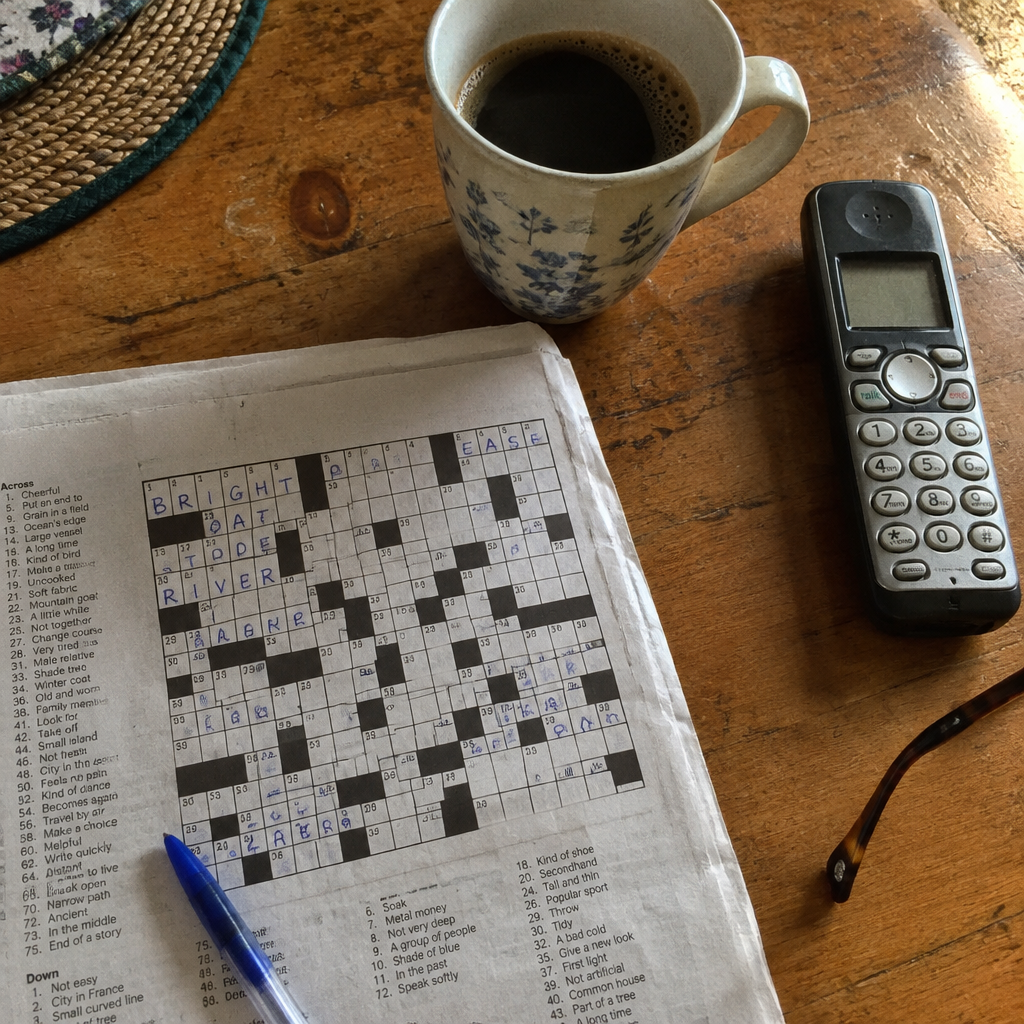
Frank Whitfield's crossword, back in pen, and the phone he answers again. Eleanor keeps them on the kitchen table. (National Health Alert)
The Numbers
The comparison is not subtle. And it is not lost on the specialists who use this daily, watching patient after patient buy a five-thousand-dollar device to chase a loss nobody told them had a cause they could fight.
What We Recommend
National Health Alert does not typically recommend specific products. In 15 years of publishing, we have never named a brand in an investigative report.
We are making an exception.
Because 48 million Americans are going deaf and most don't know it has started. Because the industry sells a device that turns up the volume and never touches the cause. Because the cells that carry a grandchild's voice are being killed by a fire a $15 blood test can measure — and a compound in over 1,000 studies calms the switch behind it. Because it has sat in medical databases for 60 years while every specialist we interviewed already gives it to their own parents.
The formulation is manufactured by Revalia®. Single-origin Ethiopian highland black seed oil — the varietal with the highest documented thymoquinone concentration. Cold-pressed to preserve the fragile compound, which heat destroys. Third-party verification of thymoquinone content on every production lot. Not a label claim. A laboratory result.
Available without a prescription. One softgel daily with coffee. Before the loss deepens. Before another child gives up on being heard. Before the marriage goes quiet. Before the sound you couldn't hear was the one that mattered.
It is not a device, not a drug, not a cure. It does not restore hearing that is already gone — nothing does. It is the one compound in the published literature shown to calm the inflammatory switch that determines how fast the cells die — so the hearing you still have gets to stay, and the voices you love stay with it.
We are not being paid to say this and have no financial relationship with Revalia. We are saying it because people are losing their hearing, their marriages, and their place in their own families to an inflammation that is measurable, predictable, and addressable — while the compound that addresses it sat in medical databases for 60 years and the country spent billions on devices that never touch the switch.

Revalia® Ethiopian Black Seed Oil
The formulation cited by every specialist in this investigation. One softgel daily. Single-origin Ethiopian highland. Cold-pressed. Third-party verified. 90-day empty-pouch guarantee — if it doesn't work, you pay nothing.
SEE THE COMPOUND →What Readers Are Saying
"I spent two years thinking my husband Frank had stopped loving me. He'd gone quiet, cold, distant. He was going deaf, and hiding it out of pride. His CRP was 4.7. Mine was 3.9. I found this at my kitchen table at 2 AM. We both take it now — his CRP is 1.2, mine is 1.1. He does his crossword in pen again and he answers the phone again. It doesn't give back what he lost, but we're protecting the rest. If someone you love has 'gone cold,' please check their ears before you give up on them."
"I'm an audiologist. Sixteen years. My own mother started slipping away from the family and everyone thought she'd gotten difficult. I knew better. Her CRP was 4.4. I put her on the compound and got her tested, and it dropped to 1.3 in two months. Her follow-up audiogram hadn't gotten worse — the first time in years it held steady. Three of us at the clinic take it now. I fit the devices all day, but this is the only thing I've found that goes at the actual cause."
"I almost divorced my wife of forty years because she 'stopped listening.' She hadn't. She was going deaf and too ashamed to say it. The only full sentence she heard clearly in a year was me asking for a divorce. I'm a physician and I missed it in my own house. We both take this now. Her CRP went from 4.2 to 1.4. We sit close, we face each other, and I have my wife back. Do not do what I almost did."
"My father nearly let my two-year-old choke because he couldn't hear him gagging ten feet away — a small child's cry is exactly the pitch that goes first. His CRP was 5.1. That afternoon terrified all of us into action. He got tested, he takes the compound, his CRP is 1.5 now, and he sits close enough to touch the little ones. If you hand your kids to someone older, get their hearing checked before something you can't take back happens."
The Compound Nobody Told You About
Frank spent two years thought cold by the family that loved him. A grandmother screamed at a grandchild for mumbling he never made. A man nearly ended a forty-year marriage. Same silent fire, same $15 number nobody checked. The device turns up the volume. One softgel a day drains the fire.
The cells you still have are worth protecting. The window is the one where nothing feels wrong yet.
SEE WHAT SPECIALISTS ARE USING →Disclaimer: This article is for informational purposes only and does not constitute medical advice. Consult your healthcare provider before starting any new health product. Individual results may vary. These statements have not been evaluated by the Food and Drug Administration. This product is not intended to diagnose, treat, cure, or prevent any disease.